
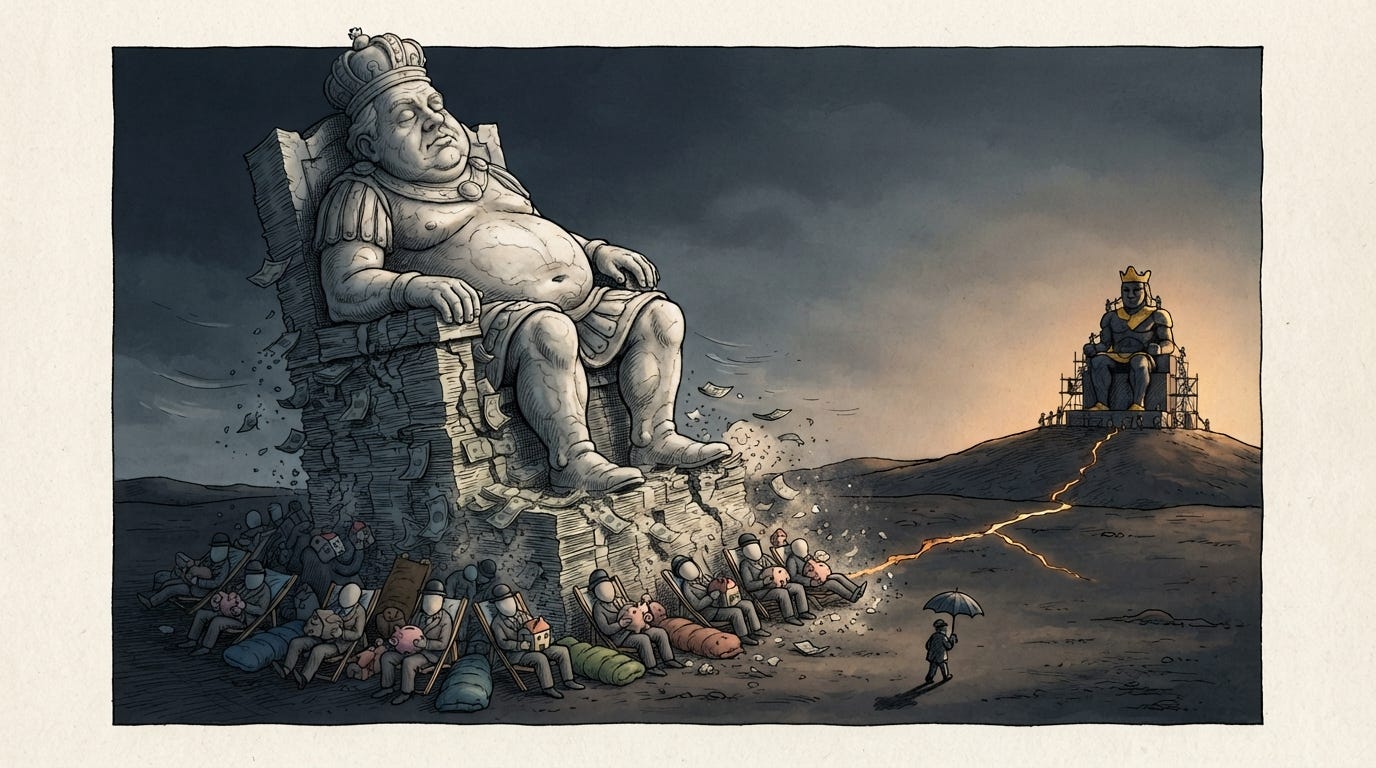
Two links first. Not out of vanity. For context.
In April 2024 I wrote that world orders last somewhere between 100 and 200 years and that ours was running out of road: Asymmetric Risks in US Economy. In March of this year, when Dalio posted that tweet that went past 70 million views, I said it again: The New World Order Has Already Begun.
Today I’m not here to tell you it’s coming. I’m here to tell you it’s here.
Sweden voted last Sunday. The Sweden Democrats lost ground for the first time in sixteen years. Sounds reassuring, doesn’t it? It isn’t. The right-wing bloc they belong to fell three seats short of keeping the government. And the explanation Swedish analysts are giving is the one that keeps me up at night: they lost votes because their positions on immigration and crime are now everyone’s positions. You don’t need the outsider once the outsider has already won.
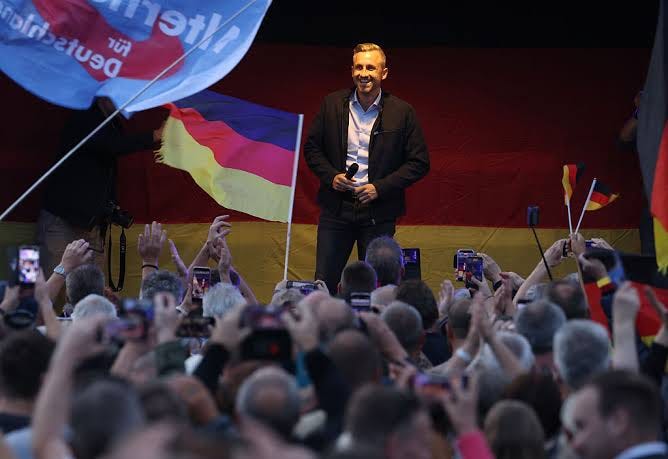
One week earlier, Saxony-Anhalt. The AfD took 43.8%. More than double its 2021 result. Three seats short of an absolute majority and of forming Germany’s first far-right state government since 1945. Merz’s CDU collapsed to 17%. And Berlin and Mecklenburg-Vorpommern vote on September 20.
Shall I keep going?
Meloni runs Italy. Orbán has run Hungary for over a decade. Babiš is back in Czechia. Chega is the second-largest party in Portugal. The FPÖ won the Austrian election. Wilders topped the Dutch vote. Reform swept the British local elections and cost Starmer his job. Le Pen and Bardella lead every poll for 2027 in France. In Spain, Vox. In Argentina, Milei. In the United States, you know who.
I have no opinion on whether this is good or bad. That’s not my job. My job is to read signals. And this one, Dalio described with precision years ago: wealth and values gaps that can no longer be bridged by compromise, and democracies that fall into disorder because half the country stops believing in the rules. That’s stage 6. The last one.
The previous stage 6 started in 1929 and ended in 1945.
Now the uncomfortable question. What happens to money when an order ends?
What happened to the pound after 1945. It keeps existing. It stays in your account. But it stops being what it was, and nobody sends you a notice on the day it happens. You notice years later, when you look back and see what it used to buy.
Dalio says it plainly: in the 35 years before 1945, almost all wealth was destroyed or confiscated in most countries. We don’t read about it because the books were written by the survivors. Survivorship bias. The United States won, and that’s why you believe stock markets always go up.
What if this time the winner isn’t you?
My estimate, and I’ve held it for years, is that more than 95% of people will lose a meaningful part of their wealth in this transition. Not because they’re stupid. Because they’re positioned for a world that no longer exists. Deposits, their government’s bonds, an index fund and an apartment. All of it denominated in a currency that is going to foot the bill.
But there’s something worse than slow erosion, and this is where Taleb comes in.
The end of a cycle is not a straight line down. It’s an age of revolutions. And revolutions don’t send invitations. They arrive all at once, on a Tuesday, when nobody’s looking.
Think about how markets work now. News breaks in Tokyo and within milliseconds it’s in the order books in Chicago. There has never been this much leverage, this many short-volatility bets, this many strategies that make a little money every day as long as nothing happens. Taleb calls it picking up pennies in front of a steamroller. It works. Until it doesn’t.
August 2024. The Bank of Japan raises rates by a quarter point. A quarter. The VIX goes from 16 to 65 in a single morning. The Nikkei drops 12% in a day. Thousands of leveraged yen carry positions blow up. How many of the people inside them thought that was possible?
March 2020. A virus. The S&P loses a third in four weeks.
April 2025. Some tariffs. Markets in freefall, panic everywhere. That week our options position was up 300% to 400%, and I walked through it in detail at the time. Not luck. Structure, built months in advance.
And 1998. LTCM. Two Nobel laureates, perfect models, leverage of 25 to 1. Their system said what happened couldn’t happen once in the life of the universe. It happened in August.
This is the point from Taleb that almost nobody internalizes. The black swan isn’t the rare event. It’s the event your model said was impossible. And precisely because of that, when it lands, there’s nobody on the other side of the trade. Everyone tries to leave through the same door at the same time.
In an age of revolutions, that door is going to be very crowded.