
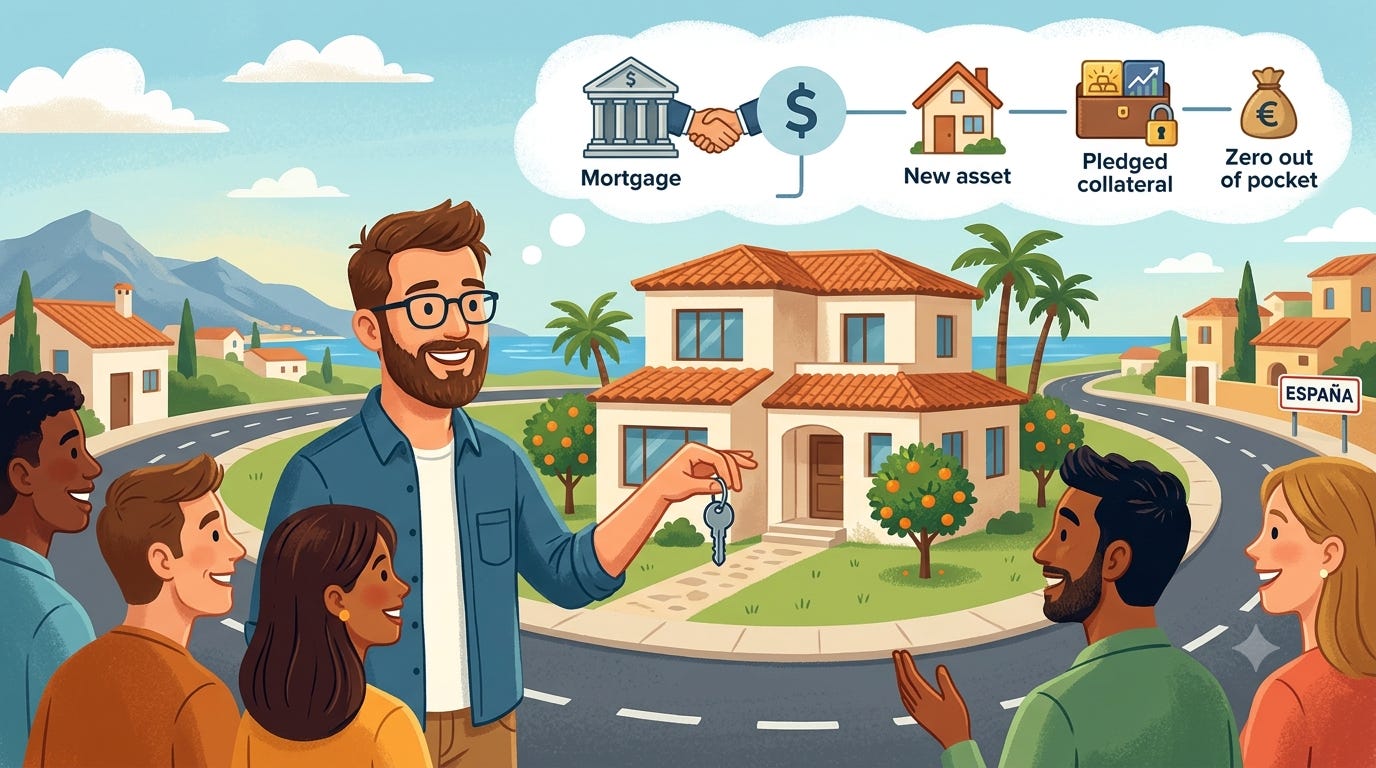
In 2021, I gave some advice to a group of people: take out a mortgage and buy a house. I didn’t tell them to invest in the stock market, or to try to find the next big thing, or to wait for Bitcoin to go up in value again. My advice was simple: borrow some money and use it to purchase a home.
We’ve been taught to think that wealth is all about what we own, the things we can see and touch. But the truth is, it’s not just about what’s on the plus side of our finances. We tend to overlook the other side, the part where our debts and liabilities are listed. However, in today’s economy, where there’s a lot of money floating around and interest rates are really low, the real advantage isn’t just about what we have, but about who’s paying for it. It’s about whose balance sheet is strong enough to cover the costs of what we want. Think about it, when we want something, we don’t just look at whether we can afford it, we also think about who’s going to foot the bill. Is it us, or is it someone else? That’s where the real power lies. It’s not just about having money, it’s about having the right financial backing. And that’s what sets us apart in today’s financial world.
I purchased a home that year, and when I think about it, the initial cost, the increase in value over time, and the mortgage all add up to a return on my investment that’s well over 100%. And the best part is, it just keeps getting better every year the property value goes up. The bank actually provided most of the funding, so my main contribution was making the decision to take the plunge. It’s amazing how much of a difference that one decision can make.
Now that we’ve got the simple part out of the way, let’s take a closer look at the second deal, because it’s really the one that’s worth our attention.
I bought a rental near Valencia and financed 80% with a mortgage, the way anyone would. The 20% deposit is where it gets interesting. I didn’t raise it by selling savings. I pledged a fund portfolio I already held, roughly half gold and half equities, and borrowed against it at around 3.5%.
I didn’t make a single sale, but somehow my portfolio just kept on growing. It continued to earn interest and even gave me the deposit I needed. The best part is that I didn’t have to use any of my own money to buy the house, and now it’s actually paying me back every month. It’s like I got the house for free.
Let’s crunch the numbers for a €200,000 property. If you put down 20% and finance the rest, you’re looking at a mortgage of €160,000. With a fixed interest rate, your annual payments would be around €8,900. Now, for the €40,000 deposit, let’s say you borrow that against your portfolio at 3.5% interest - that’s roughly €1,400 per year. If you rent this place out, you can expect a net yield of 7.5%, which translates to €15,000 per year. So, after paying off both loans, you’d be left with around €4,700 in positive cash flow from the very first month. And the best part? You wouldn’t have to pay anything out of pocket. This is just a rough estimate, but it gives you an idea of how the numbers could work out. You can scale this up or down to fit your specific situation, but it’s definitely worth considering. The key is to find the right balance between your mortgage payments, loan servicing, and rental income. With the right combination, you could be looking at a significant amount of positive cash flow each year.
Here’s the thing, the cash flow is only half the story. If you give it three years, you’ll see the property value go up by 40% and the portfolio you’ve pledged will increase by somewhere between 40 and 50%. When you add all that up, the total value created from the property, the collateral, and the rent you’ve accumulated will be around €110,000. And the best part is, you won’t have to put in any of your own money to make it happen - zero personal capital deployed.
Building wealth isn’t just about saving more and piling it up. It’s about using what you already have to get more. Think of it like layers - each thing you own helps you get the next thing. And debt, when used carefully, can actually help you move faster. Most people sell one investment to buy another, but that’s not the best way. The really smart investors use their good investments to borrow money and keep all their investments growing at the same time. This way, they can make more money without having to sell anything. It’s like a snowball rolling down a hill, getting bigger and faster as it goes.
You don’t have to be rich to start taking control of your finances. What you need to do is change your mindset about debts and expenses. Instead of thinking of them as things that just happen to you, start thinking of them as tools you can use to your advantage.
This is the line between the people who accumulate and the people who build. The next arbitrage of this size, the kind that actually moves the needle, goes to the readers backing this project directly, and it’s worth being on the inside for it.