

There’s a well-known quote from Charles Munger (who, sadly, left us just before turning 100):
“I’d like to know where I’m going to die, so I never go there.”
It sounds simple, but there’s deep reflection behind that.
Taleb understood this perfectly. That’s why his portfolio is completely asymmetric, built to withstand any possible event.
I think a mix of both Taleb and Munger led me to build the asymmetric portfolio.
A portfolio that benefits from market fragility.
And markets are getting more fragile every day.
Do you remember just a few months ago when silver and gold moved as much as 20% and 40% within a few sessions?
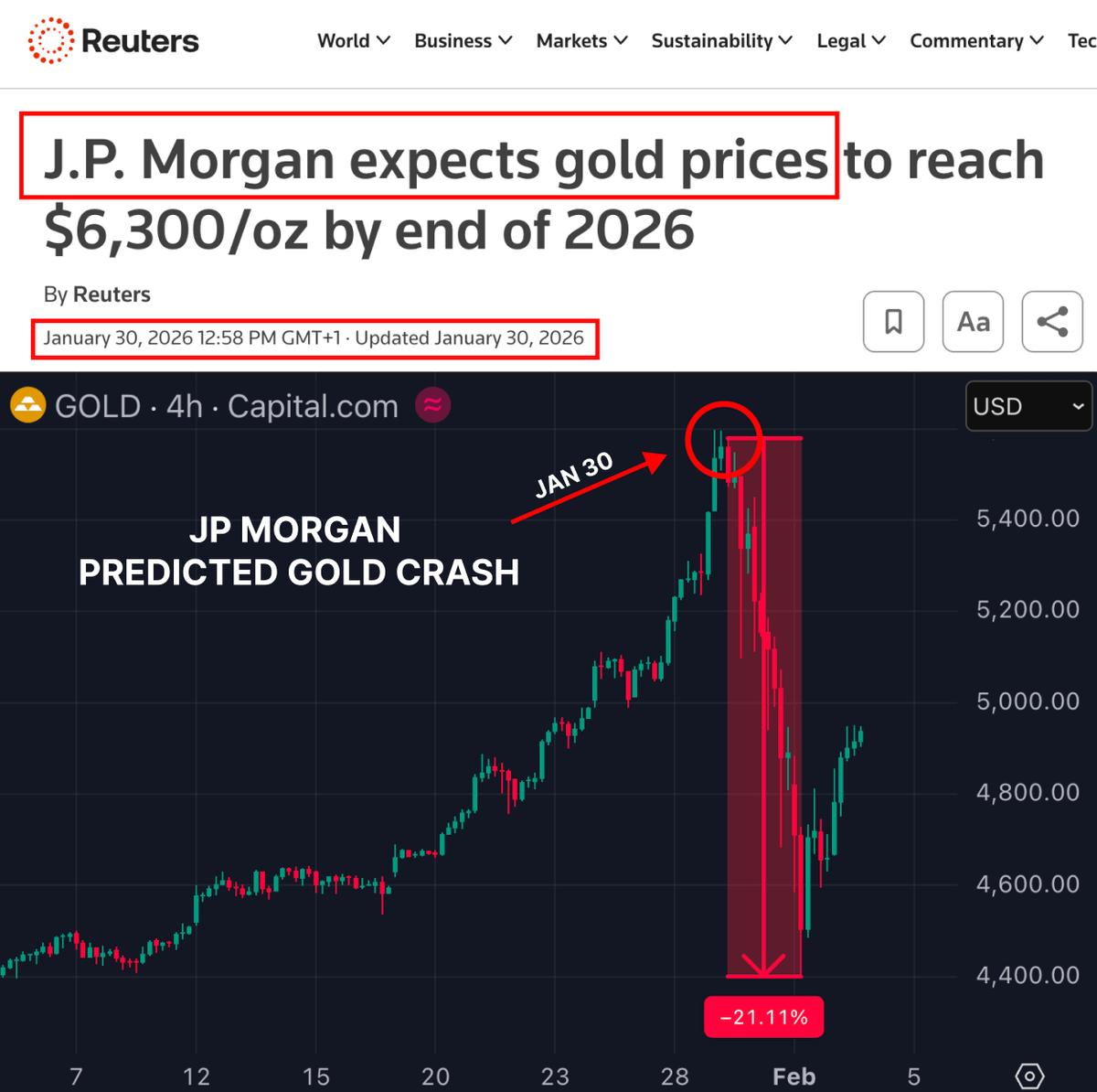
That meant roughly $7–9 trillion was wiped off the markets, in other words, the value of the 2–3 biggest companies in the world, gone in just a few days.
Is that even possible?
Is there really that much money moving around?
No. And no.
The reason this happens is simple: most people don’t understand that:
The price is just the last trade made between two people
There’s an endless web of financial derivatives that makes prices move violently
Knowing all this, and following the logic of Taleb and Munger, today I want to explain how not to die in the world of investing.
Some of it might sound obvious. But it’s worth saying out loud, because humans have a cognitive bias: we forget pain quickly.
And when we forget pain, the same mistakes get repeated. Again. And again.
At the end, I’ll show you how to avoid this trap and the best way to structure your portfolio to survive.
Not knowing your fixed costs
This is the most common mistake people make. If you’re a person, anything you pay on a recurring basis is a fixed cost. You can only go broke if your fixed costs exceed your income.
I know some will talk about variable costs, but if you’re a person, it’s easy to cut those when necessary.
The most common fixed costs?
Mortgage or rent
Utilities
Subscriptions
School tuition
And if you’re a true financial suicide case, a second home
If you’re running a business, the biggest fixed costs are:
Payroll
Raw materials
Bill Gates understood this when Microsoft was still a young company. He said he came up with a hyper-conservative strategy: keep enough cash in the bank to pay salaries for a full year, even if zero revenue came in.
Warren Buffett echoed a similar idea when he told Berkshire Hathaway shareholders in 2008:
“I’ve promised to always run Berkshire with more-than-abundant liquidity. If I have to choose, I won’t trade a single night of sleep for the possibility of extra profits.”
What happens most of the time is that we assume an optimistic bias when taking on risk, the “Russian Roulette Syndrome”:
It’s the emotional attachment to a favorable probability, even when the downside is utterly unacceptable.
The odds are on your side in Russian roulette.
But the negative outcome outweighs all potential upside.
Yes, you need to take risks to make progress.
But you should never take a risk that could destroy you.
Leverage
This one’s the clearest.
If you have Bitcoin in a Ledger, no one can take it from you.
If you have gold in a safe, same.
Even if you own a Nasdaq ETF, it’s still relatively safe, even though some of those companies might be leveraged, they’ll likely be replaced by others with stronger balance sheets over time.
But it’s a different story when you’re the one holding leverage… and you’re the weak link.
And yet, all of that breaks into a thousand pieces if leverage is misused.
Leverage itself isn’t bad. In fact, when used well, it’s what turns a good portfolio into a lethal weapon. But the problem isn’t leverage. The problem is who’s holding it.
If your assets are leveraged, and you don’t know it, you’re already dead.
If your lifestyle is leveraged with fragile income and high fixed costs, you’re also dead.
If you need to sell assets during stress just to pay your bills, you’re already dead.
People think financial ruin hits like lightning.
In reality, it’s a small wound that gets infected slowly until one day you can’t walk anymore.
And the worst part is you knew it, but ignored it.
That’s why there’s only one kind of portfolio that survives all of this:
A portfolio that never forces you to sell. That pays you just for breathing. That feeds off chaos.
An asymmetric portfolio
One that clearly separates your assets into three boxes: flow, core, and optionality.
One where your core is never touched, it’s your foundation of power.
Where your flow covers your fixed costs every single month, letting you live with dignity without touching your core.
And where your optionality lets you strike when others are paralyzed, because you have liquidity, margin, and patience.
If you don’t build this, sooner or later the system will force you to sell your soul to pay rent.
It doesn’t matter how hard you work or how much you earn. If your portfolio lacks antifragility, the system will wipe you out in the next dislocation. Or the one after that. It’s just a matter of time.
As Munger said, “I’d like to know where I’m going to die, so I never go there.”
The funny thing is: in finance, we do know where most people die.
They die from lack of liquidity. From being forced to sell. From a lifestyle that demands they do.
And yet they keep walking straight into that trap, over and over again.
Taleb understood this perfectly. That’s why his portfolio is built to benefit from chaos, not resist it.
That’s where real wealth is born.
Not from predicting the future.
But from designing a system that works even when you’re wrong.
If you want real wealth, forget about “earning it someday.”
Focus on living from flow right now.
Make sure your core is never touched.
And keep liquidity (and courage) to strike when everyone else is panicking.
Because wealth isn’t in the number.
It’s in the structure.
Now our portfolio…