
It all started last week when I was listening to a Spanish podcaster. He makes a lot of money, which is why he moved to Andorra. For those who don’t know, Andorra is like the Dubai of Europe, or rather, of Spaniards. A place to pay less tax and live surrounded by people making serious cash.
Less dunes, more snow. But it’s the same game.
This podcaster bought a house that turned out to be in an avalanche risk zone. He had no idea. Lost nearly 100k and now he’s in court. Sure, 95% of the time nothing happens. But it’s the 5% that will crush you. Neighbors, hidden issues, weather damage, stuff you’ll never catch in two or three visits.
That’s why I’m writing this today. Because in 2026, investing in real estate just doesn’t make sense anymore. Not like it used to. A decade ago, it was still one of the best ways to get rich. Kiyosaki, Cardone... The banks loved it. You bought something they could locate and touch.
That allowed them to give you financing. You made more money, and they made money on your money.
But things have changed. Now, with a simple index fund, you can borrow against your position. Why? Very simple: the assets of a company like Google, both tangible and intangible, are worth far more than that house you have in Detroit. Same with the podcaster’s snow-covered mountain trap.
You don’t have to be a genius. The banks know it too. But:
Until now, they didn’t have the tech to make this kind of lending easy.
They make more money from mortgages than from lending against an index fund (unless the interest rate is high).
So of course they pushed real estate.
But that game is over.
Look at a fund like the Nasdaq.
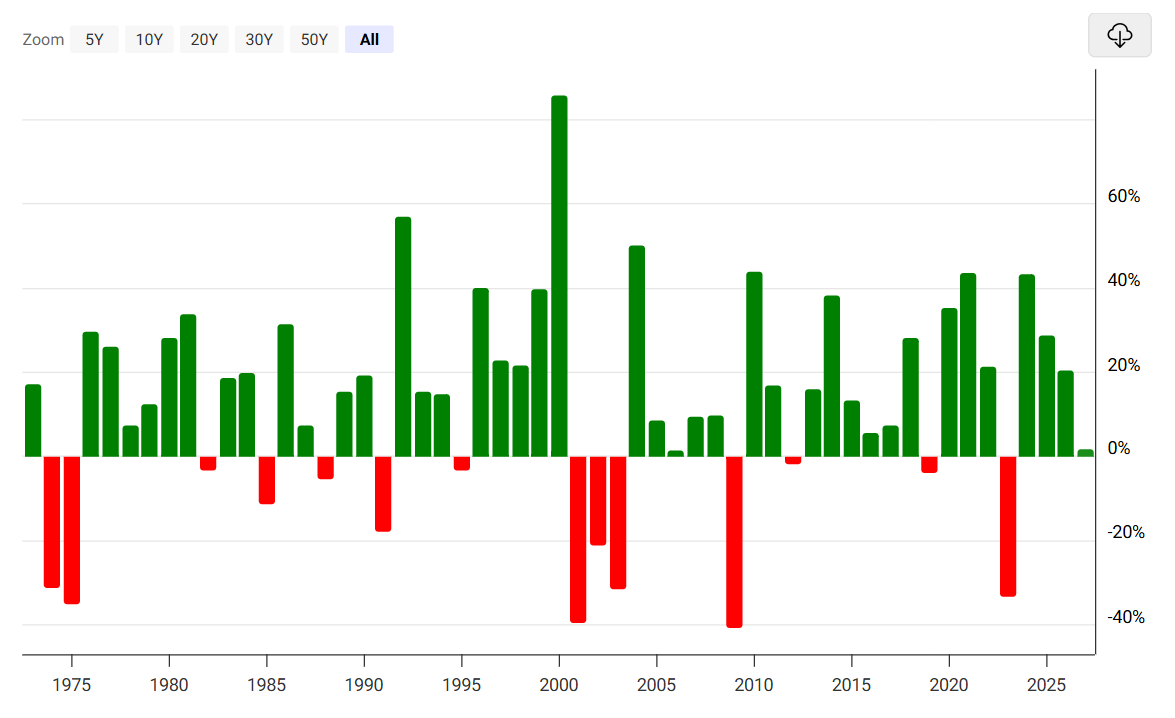
You get an 18% annual CAGR.
Leverage it 1.5x, subtract a 4% borrowing cost, and you’re getting a 25% return on your capital.
Even if you’re Cardone himself, you’re not getting that on a building, even with 5x leverage and 20% down.
Believe it or not, that’s also why we use smart leverage in our portfolio.
Now let’s look at real estate in 2026. I’m not giving you theory. I’m giving you numbers: