

Before we start. This is one of the issues I’ve enjoyed writing the most, and I think you’ll like it even more
But first, a special video.
As you know, on Wednesday we bought put options on the S&P 500 to protect part of the portfolio. Two days later, those options had gone up more than 3.5x. Nearly a 4x.
In the video we explain exactly how we did it, Taleb style. Why we pay for insurance that loses most of the time, and why that’s the road to never being forced to sell
On Friday I watched the Nasdaq lose 5.3% in a single session.
Its worst week since the first days of the pandemic. More than four trillion dollars gone in five days. Bitcoin under $59,000, 53% below its high. Gold at its lowest in a year.
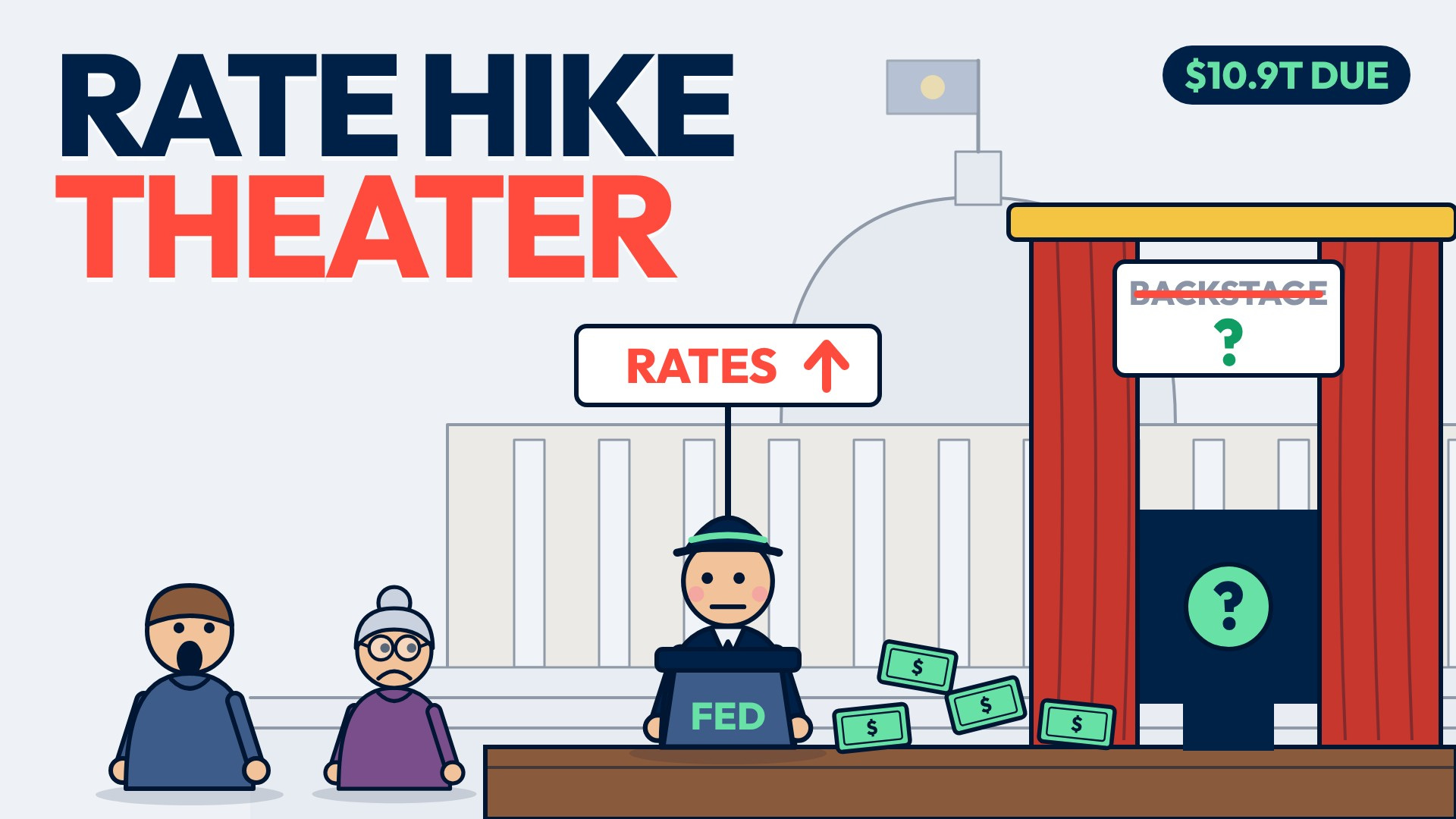
And everybody had the same explanation ready: the Fed is going to hike on December 9. One governor, Christopher Waller, said on TV that the central bank needs to “shock people.”
Fine. Now watch the other hand.
The day before, the Fed published its weekly balance sheet. Nobody reads it. I do
Treasury bills held by the Fed a year ago: $195.5 billion
Today: $580.7 billion
Total balance sheet: $6.74 trillion, $186 billion bigger than a year ago
Almost triple in twelve months. They hiked in September. They promise another hike in December. And the pile grew again last week.
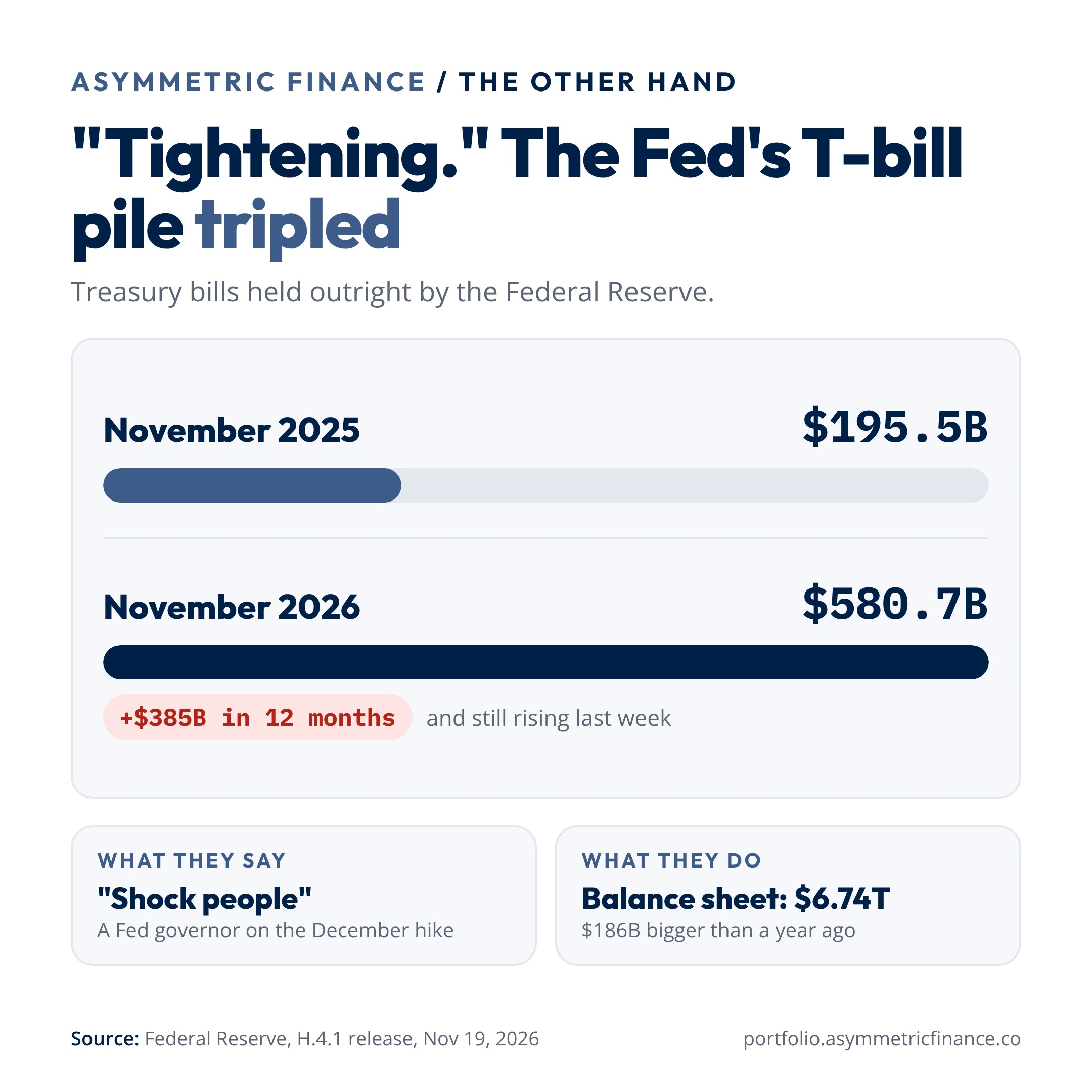
They raise the price of money at the press conference and make more of it in the back room.
You can watch that back room run live on the printer clock: dollars printed, debt and interest, ticking while you read this.
Why? because they can’t do anything else. Here is the math nobody puts in front of you.
The United States owes $40.7 trillion, a record set on Tuesday. But the number that matters is how much of it comes due right now.
Due in the next 12 months: $10.92 trillion (34% of all the debt that trades)
Of that, bills that live less than a year: $7.38 trillion
In November alone: $2.58 trillion
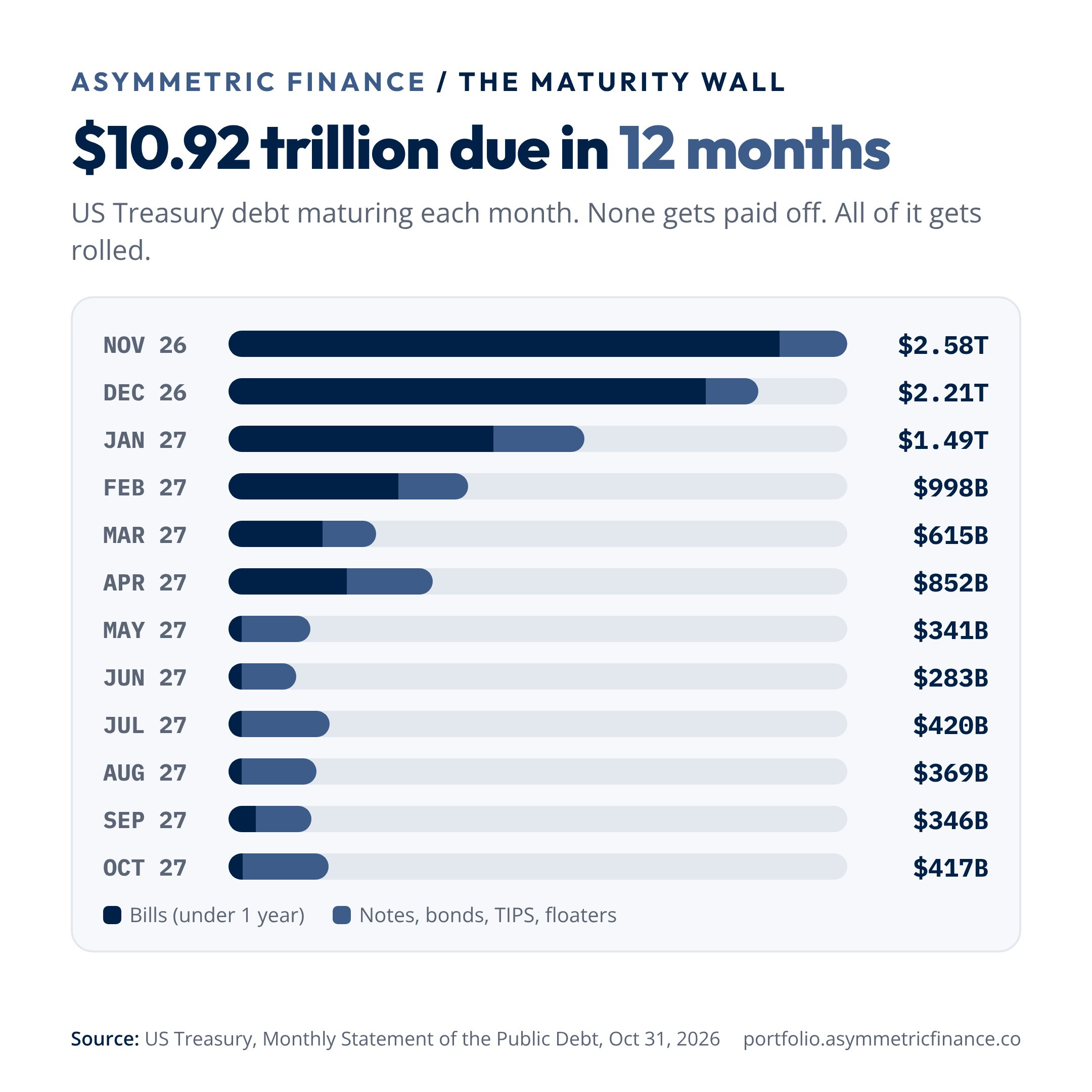
None of it gets paid off. It gets rolled. New debt is sold to return the old one, at whatever rate the market asks that day.
The debt coming due pays about 3.5% on average. Today bills go out above 4% and the ten-year has crossed 5%.
So the good question is the one almost nobody asks. If they hike, what happens?