The Real Reason Money Will Never Make You Happy (What I Wish I Knew at 20)
And Here’s Why That Matters
A few months ago, I read something by Morgan Housel that completely changed how I think about money. He said most people don’t actually want to be rich. They just want to feel rich. That difference changes everything.
When I was twenty, I thought freedom came with a number. A figure in the bank. Some magical amount that would make me stop worrying. But that number kept moving every time I got close. Like the horizon. Always out of reach.
For a long time, I confused progress with satisfaction. Making more, having more, accumulating more. Every small victory gave me a quick high, followed by a strange emptiness that I tried to fill with the next goal. I called it ambition. But it was addiction.
It took me years to realize the problem wasn’t money. It was the brain. Everything starts to make sense once you understand what your brain truly wants. In general, it doesn’t care about fancy cars or big houses. What it wants is dopamine. That’s it.
Your brain only wants dopamine.
As the book Dopamine explains beautifully, dopamine is the chemical of desire. It always wants more. More things, more stimulation, more surprises, more food, more sex, more everything. It doesn’t care about emotions, fear, or morality. From dopamine’s point of view, what matters isn’t having, but getting. It doesn’t care what you get, as long as it’s new.
I explain in the following article: Is there any way to protect wealth if money is broken?
Your brain doesn’t want things. It doesn’t even want new things. It wants to live in the anticipation of getting them. In the chase. In the process.
Will Smith once described fame in a way that fits perfectly: becoming famous is amazing; being famous has its good and bad sides; but losing fame is hell. What matters isn’t the level. It’s the change. The high comes from becoming, not from being.
And that’s exactly how money works.
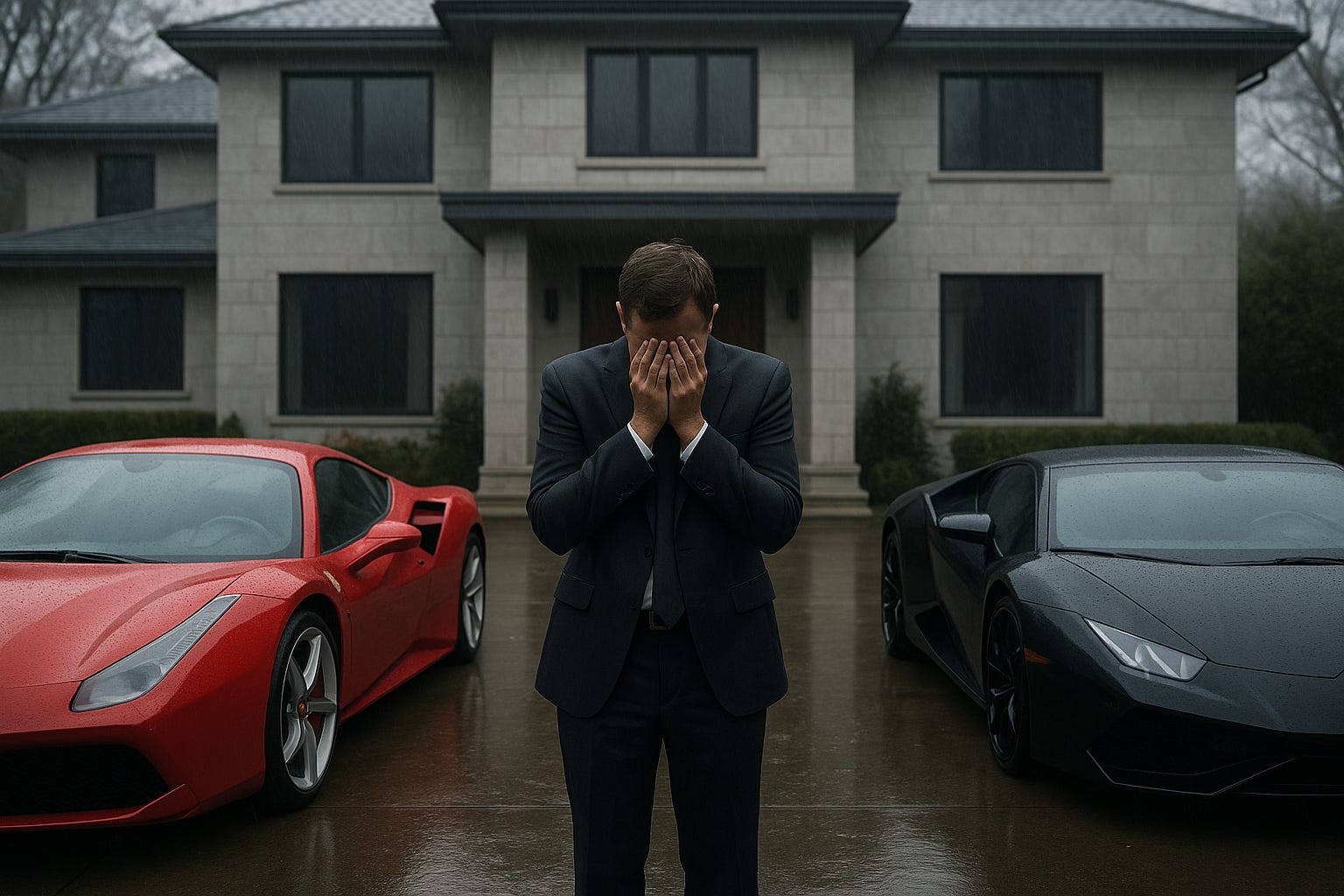
When you’re young, you dream of having a car. Any car. Then you buy one for ten thousand dollars and start dreaming of one that costs twenty. When you finally get it, you dream of a fifty-thousand-dollar one. Then a hundred. Then you start thinking about having several cars worth a hundred each. Same loop, just more expensive.
It’s not greed. It’s chemistry.
And that’s the hidden trap of material success. Every win that doesn’t redefine your relationship with desire ends up expanding your capacity for dissatisfaction. That’s why so many wealthy people are miserable. Their dopamine is still running after something it can never catch.
I’ve been there too. Years of working, investing, optimizing every move. The numbers kept getting better, but the sense of scarcity was always hiding underneath, dressed as ambition. It took me a long time to understand that money is a brutal tool for building freedom, but a terrible substitute for purpose.
Dopamine doesn’t care if it comes from a startup, a new car, a financial milestone, or a Tinder match. It just wants motion. If you don’t control that impulse, money becomes fuel for a race with no finish line.
That’s why truly antifragile systems (financial or personal) aren’t built around more. They’re built around better. They don’t hoard. They flow. They don’t chase highs. They create balance. They don’t live in the promise. They live in the process.
Over time I learned there’s a huge difference between chasing money and using money to buy time, focus, and freedom. When you stop measuring your life by what you own and start measuring it by what you can decide, everything shifts.
Real freedom isn’t having a lot. It’s being able to say no. To stop. To choose.
That’s what I wish I had understood at twenty. That money doesn’t heal anxiety; it just moves it around. That the next goal won’t give you what you think you’re missing. That what you truly crave isn’t dopamine. It’s peace.
And that peace only appears when you stop playing the infinite game of “more.”
The irony is that once you do, money starts to flow better. Because you’re no longer chasing it from scarcity, but from clarity. From internal control. From the deep understanding that nothing external will ever fill an internal void.
Money can give you freedom, but it will never give you meaning. And without meaning, every form of freedom eventually becomes just a bigger cage.

