
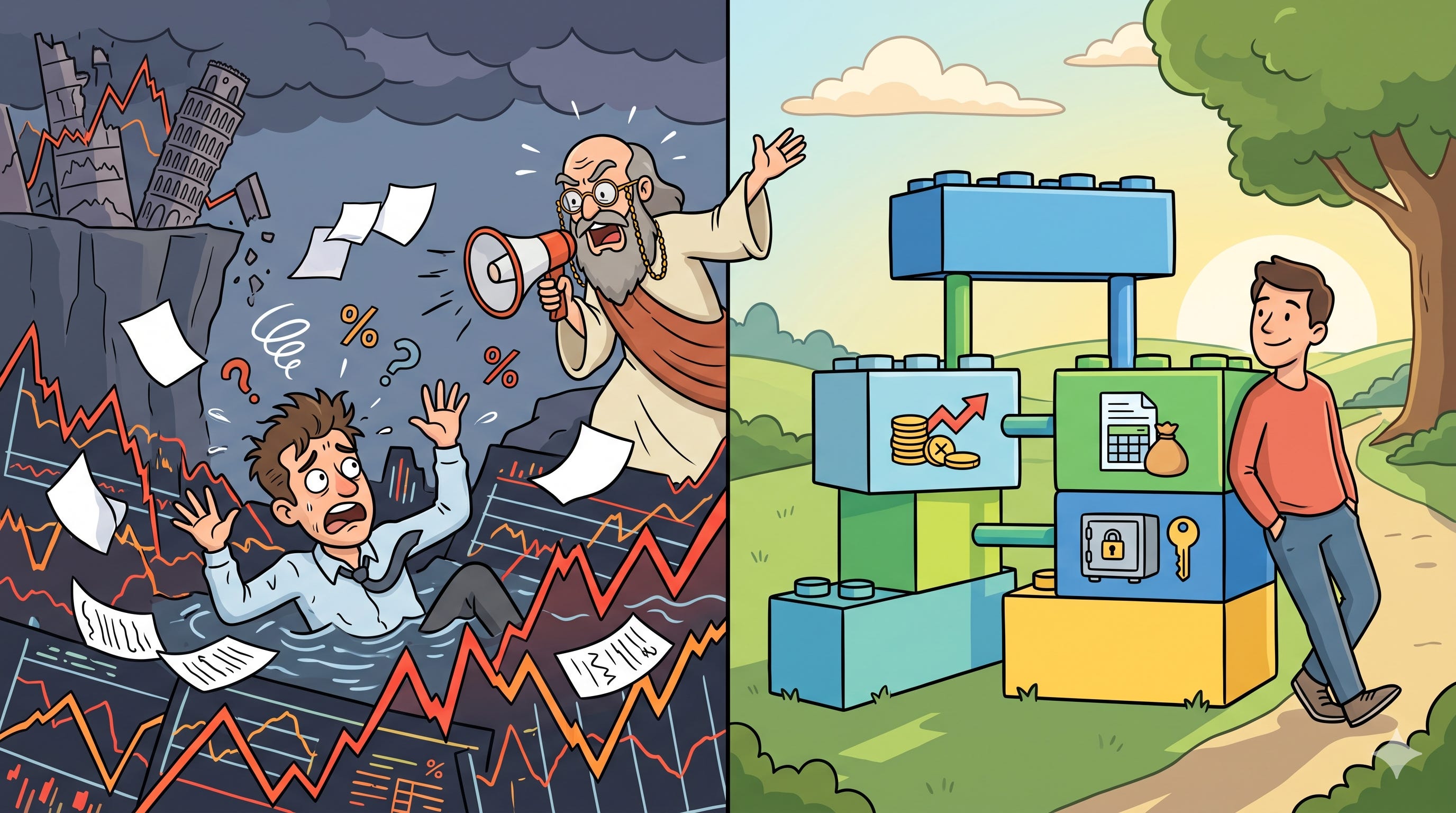
There was a line in a book that split me in two.
“I borrow, therefore I am.”
I read it, closed the book, and stared at the wall for a long while. Because I understood something I’d spent years refusing to see.
A lot of you ask me the same thing. Carlos, why don’t you analyze companies anymore? Why did you drop the fundamentals, the margins, the ratios? Why is it all money now, debt, tax tricks?
I’ll tell you the way I’d tell a son. No dressing it up.
I stopped analyzing companies because I realized I was no longer looking at the thing that mattered.
I spent years buried in the reports. Reading the accounts. Calculating sales growth. Comparing one business against another. And all of that is fine. But one day I added up two things, and they didn’t sit right with me.
First. Almost everything goes up when there’s liquidity, and almost everything falls when they pull it. The whole market moves on the money tap, not on how well a company sells its products.
Second. And this is the one that marked me. The biggest businesses in the world barely live off selling anymore. They live off lending.
Let me show you with simple numbers. Because once you see it, you can’t unsee it.
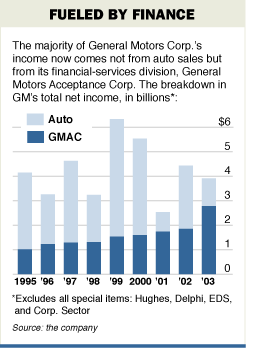
Take General Motors. You think GM makes money selling cars. It doesn’t. Or not mostly. A century ago GM built a financial arm to lend money to whoever bought the car. Over the years, that arm grew bigger than the factory. By 2004, two thirds of the quarter’s profit came from the finance unit, not the cars. The car was almost the excuse. The real business was the loan.
Take United Airlines. You think an airline makes money flying you from one place to another. Barely. United really makes money selling miles. Its points program once was worth more than the entire airline. The company was worth fifteen billion on the market. The little miles program, twenty-two billion. Read that again. The plane is worth less than the loyalty card.

Take Macy’s. A department store, the kind that’s been around forever. The stock collapsed. They closed a third of the stores. They lost billions in sales. And they’re still alive. Why? Credit cards. Nearly half the operating profit came from lending money to their own customers, not from selling them clothes.
There’s the trick. A store that barely makes money selling, but makes money lending so you can buy in its store.
This repeats everywhere. Cars, planes, department stores, appliances, phones. The product is the bait. The credit is the hook. And the fish is you.
When I understood this, a blindfold came off.
I’d been analyzing whether the company sold its product well. And it turned out the product almost didn’t matter. The real company was a lender in disguise. And you don’t understand a lender by reading how many cars it sold. You understand it by reading how it moves debt, at what rate, against what collateral, at what point in the cycle.
That’s why I moved to the monetary side. Not on a whim. Because that’s where the real difference lives.
And let me tell you something few want to hear. The richest people in the world, the ones right at the top, didn’t get there by being great accountants. They aren’t brilliant bookkeepers. They’re engineers of money. They know how to use cheap debt, solid collateral, and the tax calendar in their favor. They move capital, not products.
The real game was never the product. It was always the structure.
And here’s what changed in me. Because this isn’t just theory to show off at a dinner.
The day I stopped looking at companies like an analyst and started looking at them like an engineer of money, the way I build my own wealth changed.
I stopped asking “what’s going to go up?”. I started asking “how do I generate flow without selling what I own?”.
I stopped chasing the next winning stock. I started designing my structure. What’s the base I never touch. What I can borrow against if I need liquidity. How I arrange things to pay exactly what’s fair and legal to the State, not one euro more.
Because if the big companies live off financial and tax engineering, why would you live off guessing prices?
That’s what the system doesn’t want you to understand. It keeps you watching the chart. Up, down, up, down. Meanwhile, the ones in charge don’t watch the chart. They build the structure.
And I’ll be straight with you about what this has given me. Three things.
First, I’m freer. I don’t depend on the market having a good day. My peace isn’t tied to a green screen.
Second, I have a clear direction. Before I was stumbling around blind, jumping from one idea to the next. Now I know exactly what I’m building and why.
And third, the one that changed me most. I know I can create money with structure. With small legal mechanisms, with how I place my assets, with how I use debt and taxation in my favor. It doesn’t matter what the market does this week. The flow doesn’t depend on the price. It depends on the design.
That’s the whole difference. Going from playing the game they hand you to playing the game they play.
That’s why I don’t talk so much about companies anymore. I talk about money. About debt. About structure. About how real freedom is built.
Because the rest is noise.
And you’re old enough now to stop watching the noise.