
From time to time I write notes. Like Naval says, it’s a way to compress what I actually think into very few words. No decoration. No performance. Just signal.
What I’ve noticed over the years is that many of those notes age well. Some even get better with time. I go back to them often. I reread them. I extract what still holds. And I discard what doesn’t. That loop alone has probably been one of the highest return activities in my life.
That’s why I keep saying this, even if it sounds arrogant. If you remove the time cost from the equation, reading (my) Notes has an almost infinite return. One or two minutes. That’s it. No threads. No noise. No dopamine farming. Just a thought that either survives contact with reality or doesn’t.
A few days ago I went back to September. Almost a year ago. And I stopped on one specific note. I read it again and said to myself, this one is not timeless. And precisely because of that, it matters.
The core idea was simple but uncomfortable. What if we never see a real recession again.
Not a correction. Not a 20 or 30 percent drawdown that gets bought within months. I’m talking about the kind of recession people still reference decades later. 1929. 2008. COVID, for a few weeks at least. The kind of event where assets are destroyed, not just repriced. Where time itself becomes the enemy.
The theory goes like this. The system can no longer afford sustained deflationary collapses.
Debt levels are too high.
Political tolerance is too low.
The monetary response function is now asymmetric. Pain is not allowed to compound. It is absorbed. Socialized. Monetized.
That doesn’t mean volatility disappears. Volatility is the price of the illusion. But it does mean that the market structure we grew up with may no longer produce decade-long bottoms where you can buy quality assets at a 70 percent discount and wait patiently for normalization.
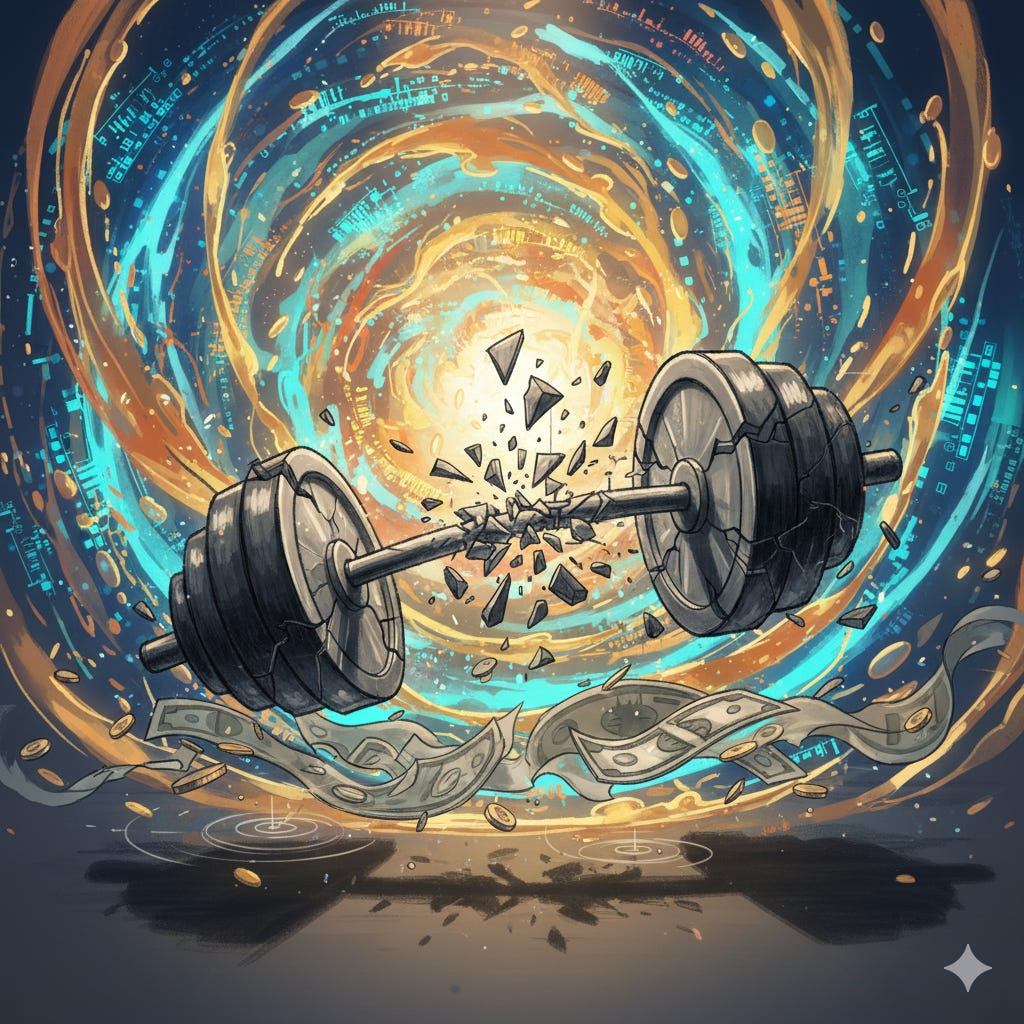
Or, as Taleb puts it, keeping a large portion of the portfolio in cash (the barbell strategy).