
Today I’m going to write something more technical than usual. If you found this newsletter through personal finance or portfolio strategy, this one might feel dense. That’s fine. But I think I need to explain it, because the mistake I’m about to describe is more common than it looks, and it costs real money.
A subscriber sent me this:
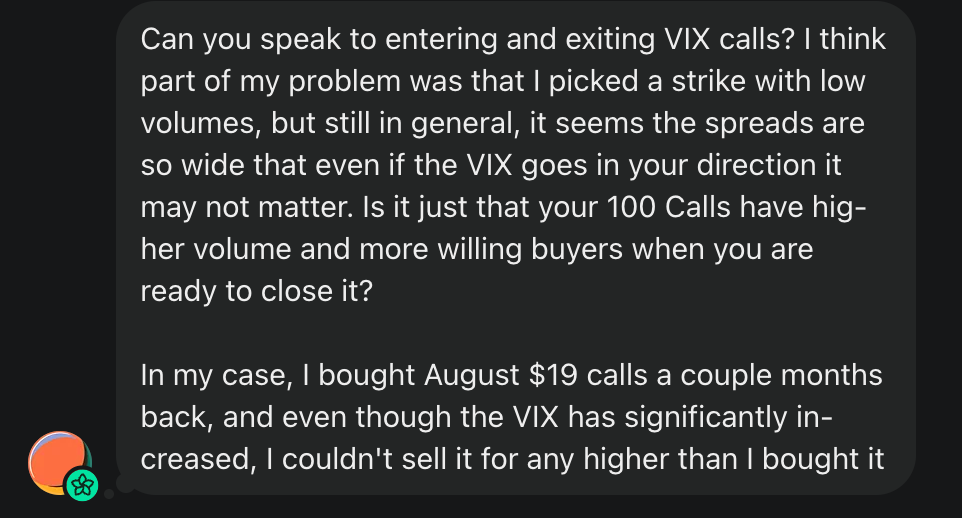
He had bought August VIX calls with a $19 strike. The market sold off. The VIX spiked. And he made nothing.
He asked whether the problem was volume, spreads, or strike selection. He wanted to know what he had done wrong.
The uncomfortable answer is this: he didn’t do anything wrong. The market already knew what he knew. And it charged him for that knowledge before he could profit from it.
This is not an execution error. It is a misunderstanding of the instrument. And it deserves a proper breakdown.
The VIX you see on your screen is not what you buy when you buy a VIX option.
The VIX spot, the number that appears on Bloomberg or your brokerage dashboard, is an index. It is not an asset. You cannot buy or sell it directly. VIX options settle against VIX futures, not spot VIX. And that distinction changes everything.
When fear builds gradually in the market, futures price it in before it happens. If sentiment deteriorates over several weeks, the August future has already moved before the spot index makes its visible jump. By the time spot finally spikes, the future barely reacts. It already got there.
Result: you bought the right thing, at the right time, and made nothing.
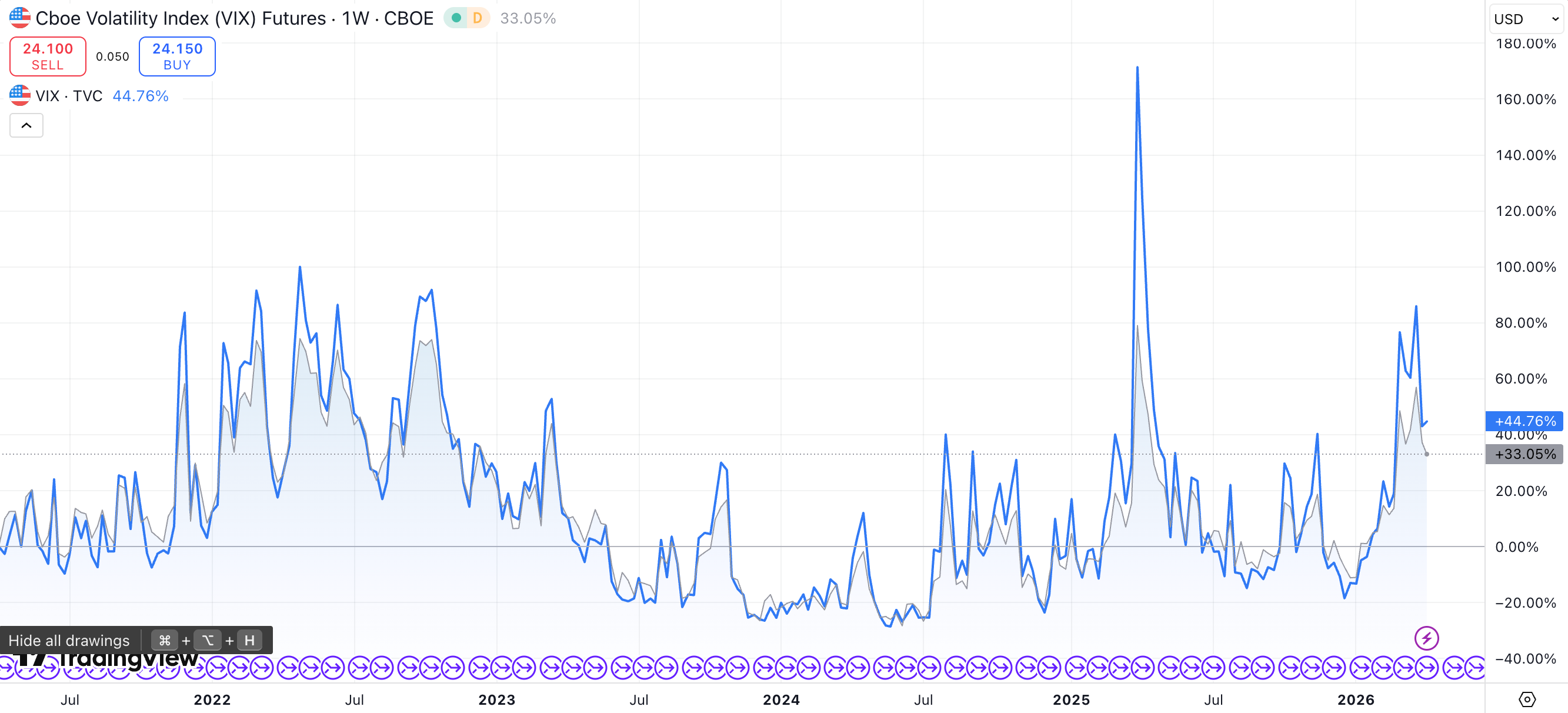
This has a name. It is called contango. It is the normal condition of the VIX futures curve. Contracts further out in time trade above spot because the market demands a premium for future uncertainty. Contango erodes your position while you wait. And if the spike is gradual rather than sudden, the futures absorb the move without your options ever reflecting it.
Deep OTM VIX calls, say a $100 strike, behave completely differently. Not because they have more volume or tighter spreads. But because they represent an event the market cannot gradually discount.